Staffies
The scramble and the joy of fuelling a team

Before Jack and I went on our first dinner date, we’d already eaten together around 30 times.
The first meal we ever shared was pre service at Pidgin aka staff food. I can’t remember which chef was in charge of staffies that particular day but a foggy memory tells me we ate pasta.
The cheap and substantial, energy-providing staple that we helped ourselves to, heaping spoons of sauce-licked rigatoni (the king of pasta shapes) straight from a stainless-steel pot into Jess Joss ceramic bowls, which were usually the reserve of daintily plated dishes from the set menu.
I initially found these moments of breaking bread as a team, slightly intimidating. I didn’t want to eat too slowly because there was still cleaning and menu-printing to do before service started. But if I ate too quickly and my metal spoon audibly scraped the raw ceramic edge of the bowl before anyone else had hit the bottom, would the chefs think I was greedy?
After my first few staff meals, I settled into the comfortable silence of this functional meal. Staff food was fuel at Pidgin. Very often delicious fuel but still, there was no fanfare or setting the table. This was a fleeting moment to gather ourselves before the restaurant filled up. A brief 20-minute window to sit in the chairs where customers would soon be with cocktails in hand, snacks called away.
At Joyau, staff food tends to be a fridge-raid affair. Particularly on days when service is busy, we’ll cave-dive to the back of the fridge and emerge with our findings – a slightly sad courgette! Cooked chicken thighs! Limp-leafed chicory! Marinated feta! –and combined with store-cupboard saviours – beans! Tinned tomatoes! Orzo! Smoked paprika! Dukkah! – warmed through, seasoned and drizzled with olive oil, a meal starts to form without doing very much at all.
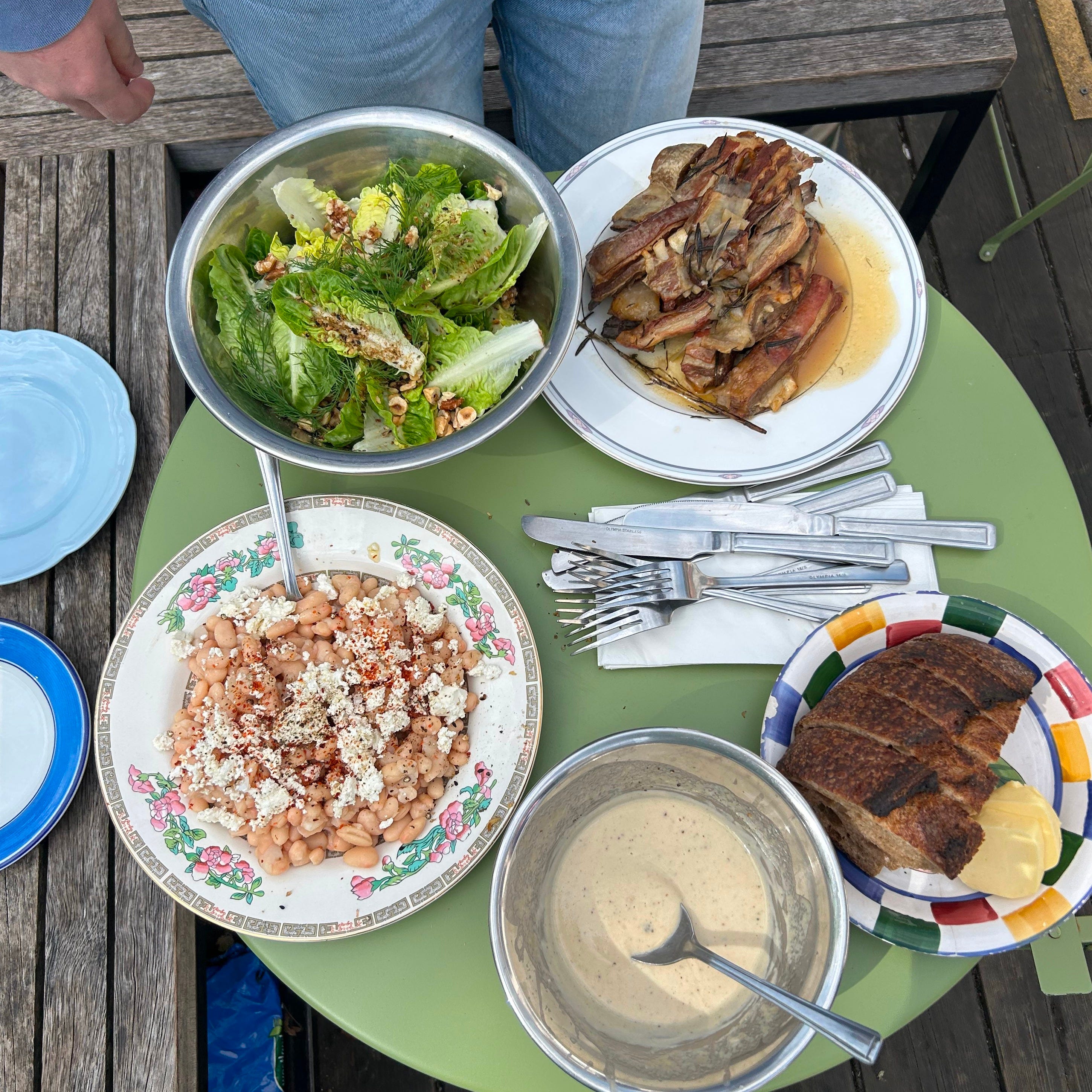
We always have potatoes on hand so roasted whole potatoes or skin-on, chunky-cut chips are a safe, delicious safety net. So too is any spoonable pasta shape – we usually have a rotation of the aforementioned rigatoni and orzo, as well as orecchiette, farfalle and casarecce – substantial and liberally dressed salads; steaming bowls of stew when it’s cold or noodles with broth; soft-boiled eggs on buttery rice and something we call a ‘picky plate’, made up of hunks of cheese with chutney, a handful of seasoned leafy greens, off-cuts of warm bread and some kind of protein so it ends up looking a little like a child’s divider plate, only without the dividers.
On days when we have more time on our hands (typically Tuesdays), we take turns to bring in something from home and pad it out with any salvageable leftovers at the bar. In Eleni’s hands, this turns into a meal of multiple components, all of which are so tasty, we practically mop the plates clean. When I scramble together staff food, I rely heavily on fresh herbs, lemon zest and some kind of toasted nut. Jack’s take on staff food is beautifully plated, evenly portioned and there’s always plenty of butter.
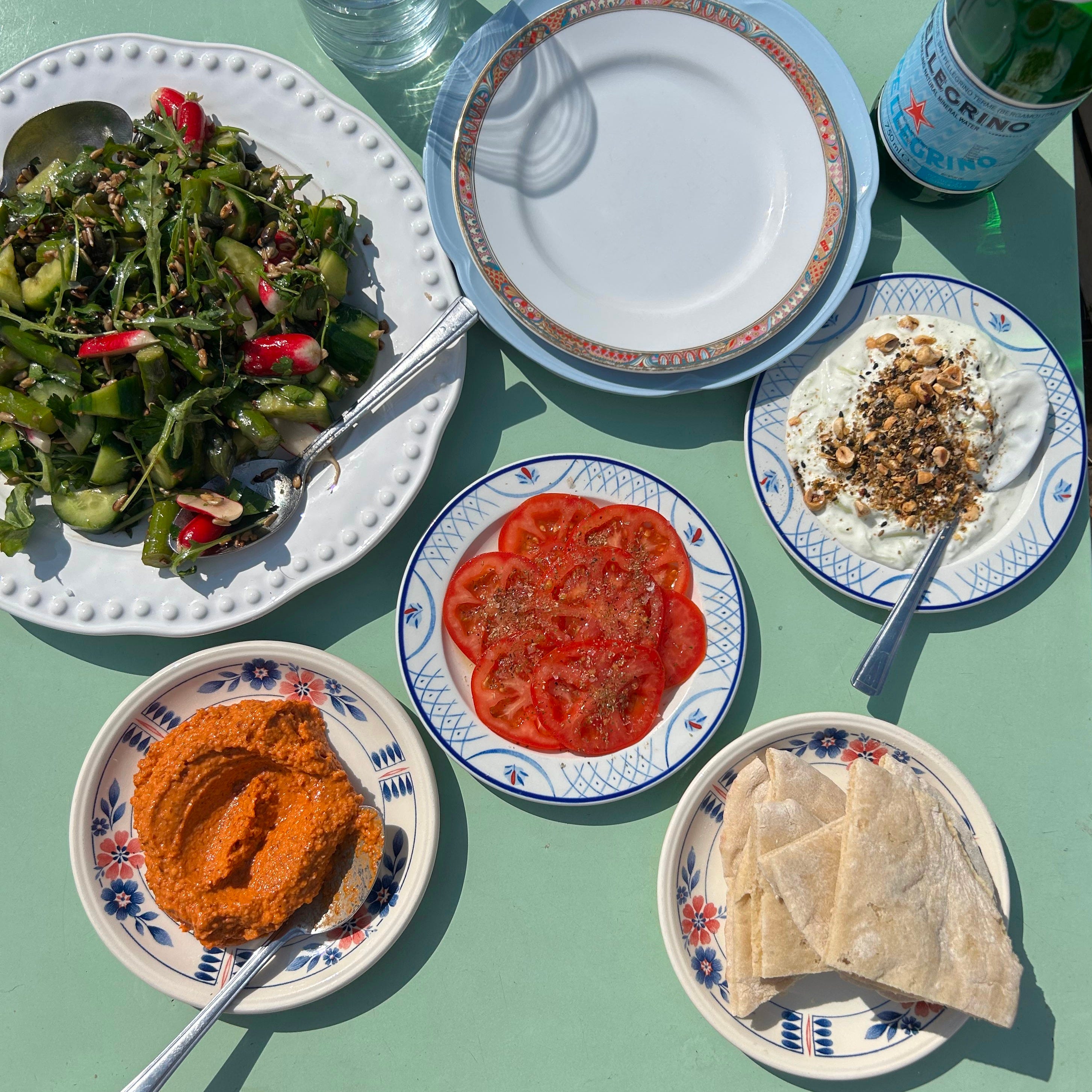
The best staff food, from my limited experience, are those meals made with little thought for the outcome but there’s care put into the process of pulling it together. Going back to Pidgin days, I remember a Japanese-style rice bowl with cured mackerel and heaps of pickled daikon and cucumbers that Hamish (Head Chef at the time) whipped together and it lives on in my memory. When I asked Jack where he had the best staff food, he said Kensington Place where almost every staff meal would involve Champ.
Chatting over staffies with Jemma the other day, she said without a beat that Koya did the best staff food – “you could just help yourself to whatever was in the kitchen, which was always healthy and delicious, and take an hour and a half to sit and eat.” Eleni said Padella had amazing staff food and her friend Dixie would resourcefully make a pie with leftover focaccia. I messaged Gaetan for his top staffies, which included lasagna, caesar salad (great way to convince people that salads equal sustenance), Kra pow, rosted vegetables and couscous, yoghurt and herbs, Panzanella (when tomatoes are in season, otherwise don’t bother), and smoothies for breakfast.
The idea of staff meal sounds romantic and charming but it can also feel like a chore to put something together from scratch when the odds are stacked against the chef, there’s barely any time between services and the fridges are full of food but there’s nothing to quickly throw into a nourishing meal to satisfy a team who’ve been on their feet for eight hours straight. It’s a physically and mentally demanding industry, the team are on their feet all day. Staff food is fuel but it’s also a chance to flex creativity without being too flowery. It’s license to go big on flavour and be unsparing with seasoning.
Staffies is ultimately a small gesture of hospitality, which is what we’re in the business of after all.
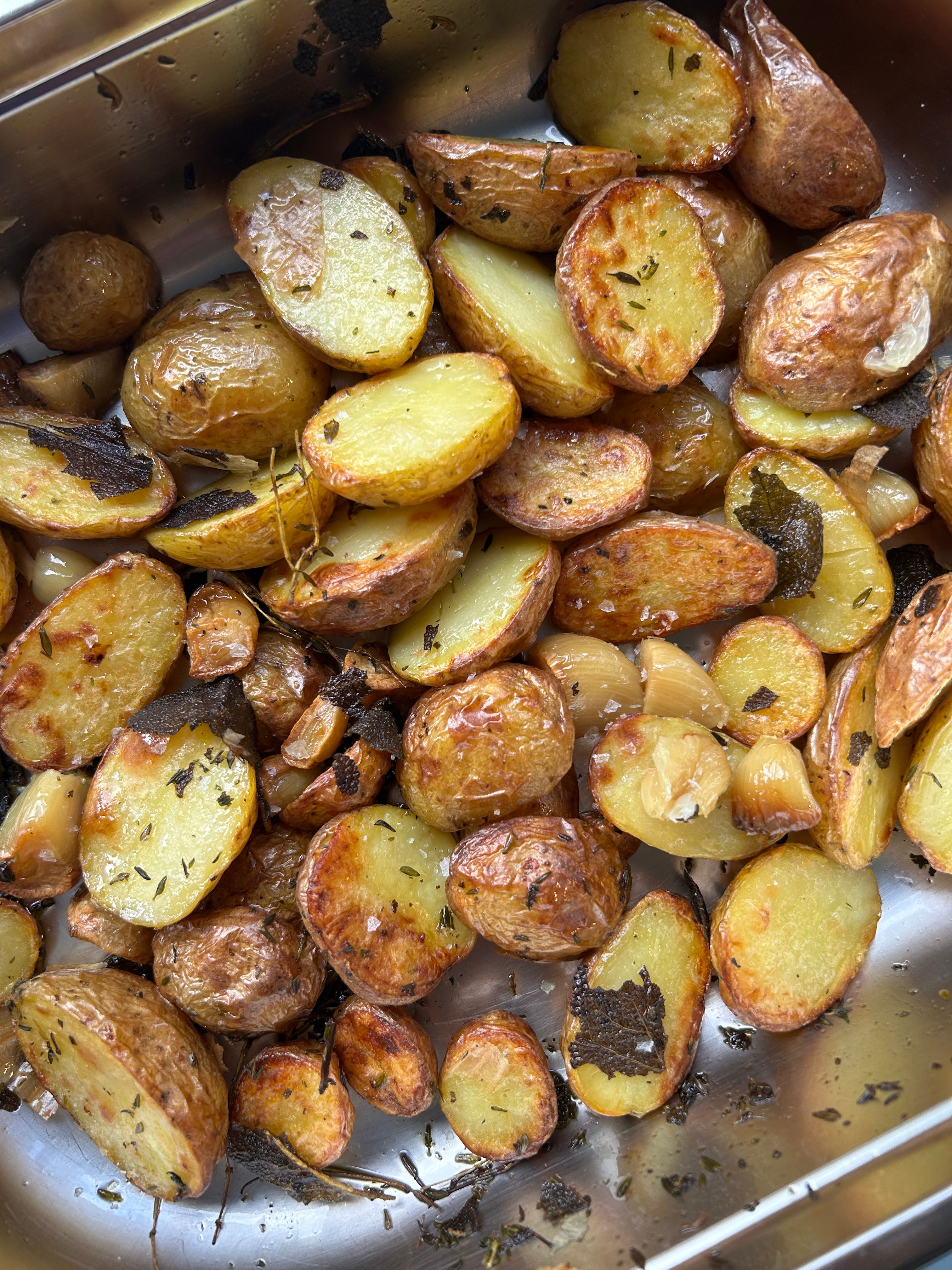
Skin-on baby roast potatoes
Hardly a recipe, more of a loose guide to cooking up a pan of potatoes big enough to feed your team.
Ingredients
800g skin-on baby potatoes
1 scant handful of roughly chopped sage and/or rosemary leaves
3 tbsp olive oil
1 large pinch flaky sea salt
Cracked black pepper (measure with your heart)
Method
Heat the oven to 200 degrees celsius. Put a large pan of water on to boil and season with 1 tablespoon of table salt. The water should be salty like the sea. Once boiling, carefully drop in the potatoes.
Cook until tender. Then drain and return to the hot pan to steam-dry for a couple of minutes before roasting.
While that’s happening, grab a roasting tin and glug in the 3tbsp of olive oil to coat the base. Put the tin in the oven to heat the oil for 2-3 minutes.
Remove the hot tin from the oven. Roll the steamed potatoes in the hot oil and give each one enough wiggle room so they’re not overlapping while cooking in the oven.
Roast for 25 minutes, or until gorgeously golden and slightly wrinkly, give them a good shake and then roast for another 10 minutes.
Season to taste with flaky salt and a splash of white wine vinegar.
Until next time, have a good one!